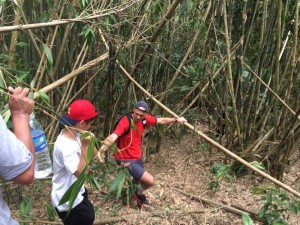
 Here are a few general reminders about the Hash
- Please make sure your kids (and any guests) sign both OUT and IN on every run, and specify accurately which run they intend to do (LONG or SHORT). If we don’t know kids are back safely, we might think they’re lost in the jungle!
- Please educate / remind your kids of the Hash “paper” protocol:
- They are to keep ensuring they are running on the right type / shape of paper for the run they are on (otherwise they could get terribly lost)
- One of the objectives of “checks” is to keep the runners closer together – the front runners should do the “checking”, and the breaking of checks should be done by the kids, who should then organise the joining up of the paper into a continuous trail so that those behind do not have to “check” all over again and become even slower in finishing
- Hash calls (kids need to be trained to use these):
- R U – calling to those in front or checking to see if anyone within earshot is on paper
- Checking – replying to those who call R U that you haven’t found the paper trail yet and are still checking
- On On – calling when found paper / when running on the paper trail
- Hares: We would not have a Junior Hash without a willing hare each month and we know how much effort goes into finding a suitable site and setting trails, often with several recce trips beforehand. We’d just like to remind you all to please choose a site where there is a safe and quiet parking area, away from any traffic passing through, and make sure to bring / lay sufficient paper to minimise the risk of anyone getting lost. If a run is set near to a kampung / village, it’s advisable to use flour / or shredded paper for sections where people might pick up our paper. Any check laid should be easily broken by the kids themselves and, to avoid confusion and mayhem, there should be no false trails or circulars – back checks can also cause confusion. As a general guide, short runs should be tailored for 3 to 6 year olds and be an easy 45 minute walk for the average 4-yr-old. Long runs should be no longer than 6 kms. Short runs should avoid long stretches of walking in a river, but multiple river crossings are OK on both.
The hares should aim to be back before the run starts, so they can give the runners a brief introduction, as follows:- explain the concept of paper / checks (especially if there are any runners who are totally new to hashing)
- describe each of the day’s runs:
- shape/colour of paper for each
- number of checks on each
- approximate length (time and/or distance) of each
- any dangers or unusual elements (e.g. a long stretch along a road or river, u-turn to follow the same paper back, etc.)
- lead warm-up exercise session (or organize someone to do this)
- The Junior Hash is one of the ways in which we, the parents, can pass on good values about caring for the environment to our children. Please ensure all rubbish is taken home with you after the run.
- Dogs on runs:
Whilst families are welcome to give their dogs an outing on our runs, here are a couple of reminders to those canine owners:- If your dog is temperamental or does not yet know how to socialise with others, they are better left at home. Not all our young members and guests are comfortable with dogs, so we would prefer not to have any scenes which may frighten them.
- We rely on the owners to be as vigilant about clearing any doggy messes around our runsites, and in the middle of the paper trail, as they are in and around their own homes.
- Dogs should be kept on leads, both for the comfort and safety of our members and guests who are not so familiar with dogs, and for the safety of any herds of sheep/goats/cows we encounter along the trail. Remember, we are running on private property most of the time.
- Number of runs:
Please make sure you regularly check the registration list as to the number of runs your child has “clocked up”, just so that any discrepancies are dealt with straight away.